Are you planning to install or repair a ceiling fan? Hiring a licensed electrician can make all the difference. Not only do they have the expertise to handle the electrical work safely, but they also ensure your fan operates efficiently and effectively. In this article, we’ll guide you through the ins and outs of licensed electrician services for ceiling fan installation and repair.
Table of Contents
- Benefits of a Licensed Electrician
- Ceiling Fan Installation Process
- Common Issues and Repairs
- Key Takeaways
- FAQ
- Schedule Your Electrical Service Today
Benefits of a Licensed Electrician
When it comes to electrical work, safety is the top priority. Licensed electricians have undergone extensive training and possess the knowledge required to execute installations and repairs without compromising your home’s safety. The benefits include:
- Compliance with Local Codes: Licensed electricians ensure that all work meets local electrical codes. This reduces the risk of hazards.
- Insurance and Liability Protection: Hiring a licensed professional protects you from liability if anything goes wrong during installation or repair.
- Expertise and Experience: With years of training and practical experience, licensed electricians are well-equipped to handle unexpected challenges that may arise during a project.
- Long-Term Savings: Proper installation can lead to fewer repairs and lower energy bills in the long run.
Ceiling Fan Installation Process
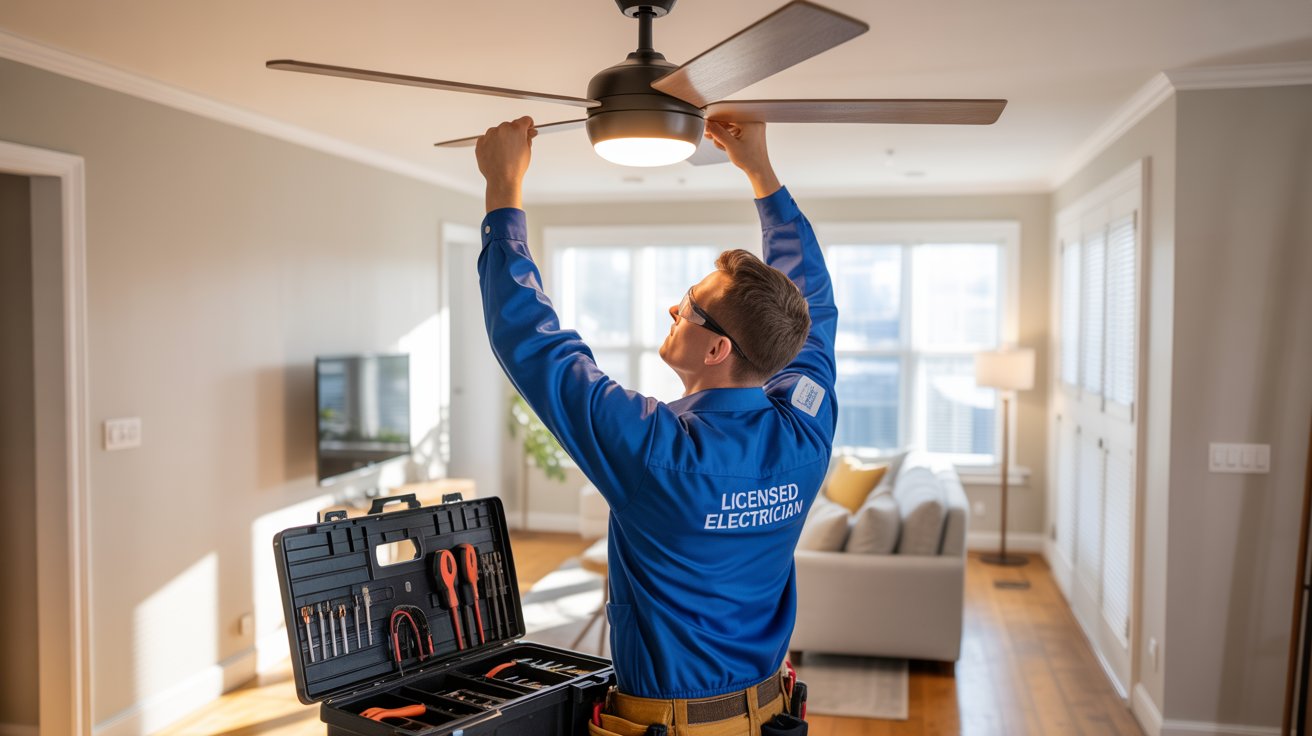
Installing a ceiling fan involves various steps, and it’s best left to professionals. Here is a breakdown of the process:
- Site Assessment: The electrician examines the location where the ceiling fan will be installed. This includes checking for existing wiring and determining the best fan size.
- Power Shutdown: Safety is key. The electrician will turn off the power at the circuit breaker to avoid any accidents during installation.
- Mounting the Bracket: A sturdy bracket is installed on the ceiling to support the fan’s weight.
- Connecting Wires: The electrician connects the fan to the existing wiring, ensuring that all connections are secure.
- Final Checks: After installation, the electrician will check that everything operates correctly and safely.
Hiring a licensed electrician for this process not only guarantees safety but also offers peace of mind knowing the job is done right.
Common Issues and Repairs
Even the best-installed ceiling fans can face issues over time. Here are some common problems that often require a licensed electrician’s attention:
- Fan Not Working: This could be due to faulty wiring, a blown fuse, or a failed motor.
- Uneven or Noisy Operation: A fan that wobbles or makes noise may need balancing or may have a loose mounting bracket.
- Fan Speed Problems: If your fan only operates at certain speeds, it may indicate a malfunctioning speed controller or wiring issues.
- Remote Control Issues: Problems with remote-controlled fans may require reprogramming or replacement of components.
In each case, a licensed electrician can provide thorough diagnostics and effective repairs.
Key Takeaways
– Hiring a licensed electrician ensures safety and compliance with local codes.
– The installation process includes a site assessment, power shutdown, mount installation, wiring connections, and final checks.
– Common ceiling fan issues include malfunctioning, noise, speed problems, and remote control issues.
– Professionals for safety and efficiency best handle troubleshooting and repairs.
FAQ
How much does it cost to install a ceiling fan?
The installation cost varies based on factors such as the type of fan, the complexity of the installation, and labor rates. On average, you can expect to pay between $150 and $300.
Can I install a ceiling fan myself?
While it is possible, it is not recommended unless you have electrical experience. Mistakes can lead to safety hazards.
How do I know if I need a new ceiling fan?
If your fan is making strange noises, wobbling, or not functioning as it used to, it may be time for a replacement.
Is it safe to repair a ceiling fan myself?
Unless you are trained in electrical work, it is best to leave repairs to a licensed electrician to avoid hazards.
How long does it take to install a ceiling fan?
Most installations take approximately 2 to 4 hours, depending on the job’s complexity and any additional modifications that may be required.
Schedule Your Electrical Service Today
If you need assistance with ceiling fan installation or repairs, don’t hesitate to get in touch! Hiring a licensed electrician ensures that the work is done safely and efficiently. For more information, contact us and take the next step towards a smoothly functioning ceiling fan in your home.